Visiting a Broch: Discover Scotland’s Iron Age Giants

In the misty landscapes of Scotland, where legends blend with reality, a remarkable piece of history stands tall—the enigmatic Iron Age brochs. These towering stone structures, shrouded in mystery and crafted by master dry-stonemasons, offer a glimpse into an era of unparalleled architectural marvels and cultural intrigue. If you’re planning a trip to Scotland and embarking on a cross-country drive, make sure to include a visit to a broch in your itinerary.
Many Scots are unaware of this aspect of their cultural heritage, and until recently, most people in Britain would confidently tell you that prior to the Romans’ arrival and their construction of walls, temples, villas, and towns, there were no multi-story stone buildings on their island. This belief is far from the truth. Brochs, towering over 30 feet in height, stood centuries before the Romans’ arrival.
What We Know About Brochs
These structures are over 2000 years old and unique to Scotland. It’s estimated that there are over 500 Broch sites across Scotland. Today, the highest concentration of brochs is centered in the North East of Scotland in Caithness and Sutherland counties, including the Orkney and Shetland Islands. The Iron Age, spanning from roughly 800 BC to AD 500, was characterized by technological advancements in iron and glass, as well as the introduction of rotary devices like the lathe and potter’s wheel. It was also marked by dynamic social changes and the rise of intricate societies worldwide.
In the rugged Scottish landscapes, this era gave rise to a distinctive architectural phenomenon—the brochs. While their exact purpose remains uncertain, historians now believe these structures were more than just fortifications. Current views suggest they served as stately homes, projecting the owner’s wealth and power. You would see these towers from afar and know that the animals and arable land around it belonged to someone. Not only that, these people could defend themselves if you were intent on raiding, so reaver beware.

The Engineering Marvels of Brochs
The construction of brochs stands as a testament to the engineering prowess of ancient Scotland. Built with local stone using advanced dry-stone techniques—where stones are meticulously stacked upon each other—these structures showcased the resourcefulness and craftsmanship of their builders. Unlike the ancient Egyptians or Romans that had plenty of free labor and experienced architects, these towers were built by local families and tribes. It’s still not clear how the expertise was passed on between different regions of Scotland. Were there itinerant broch builders? Who knows.
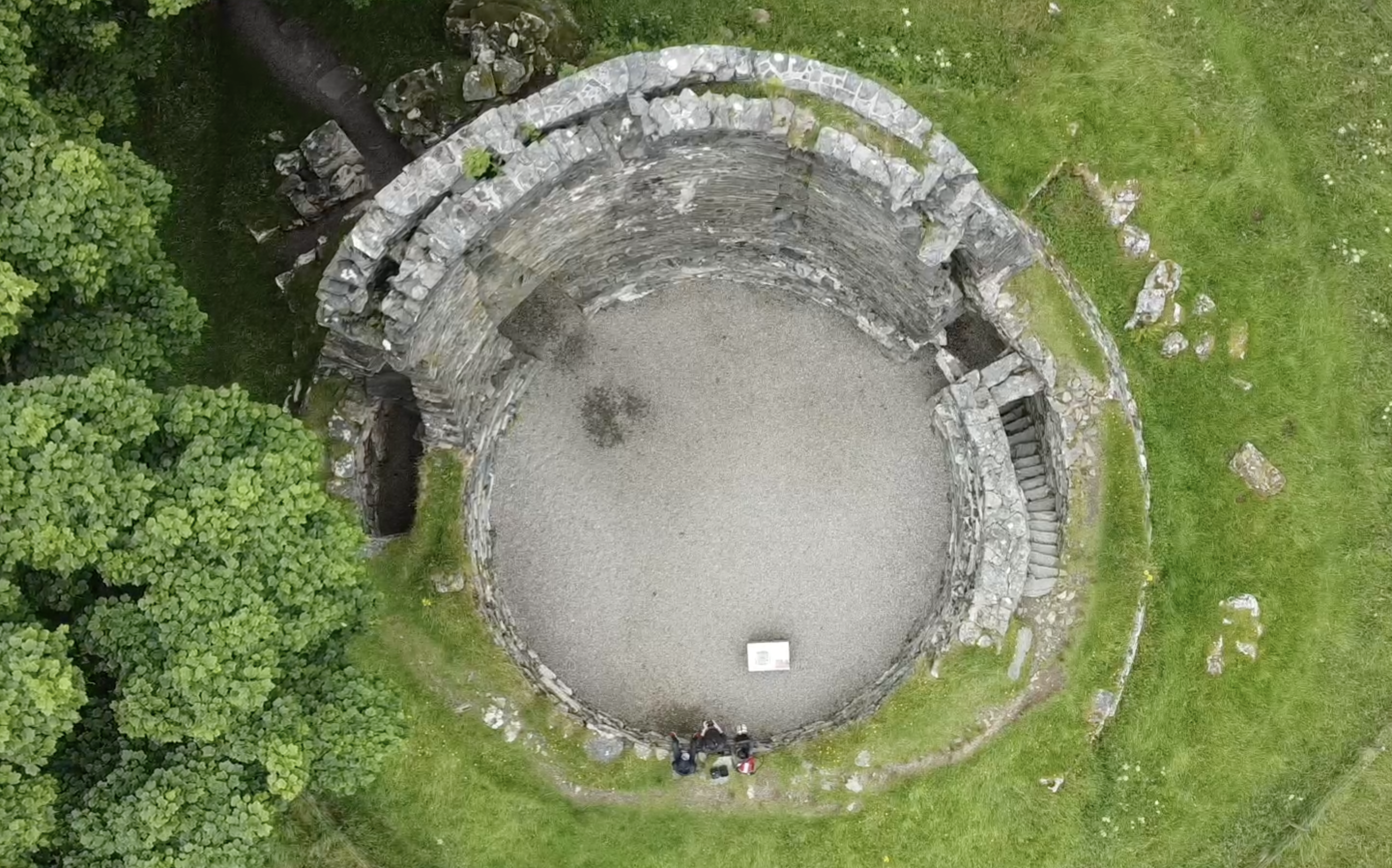
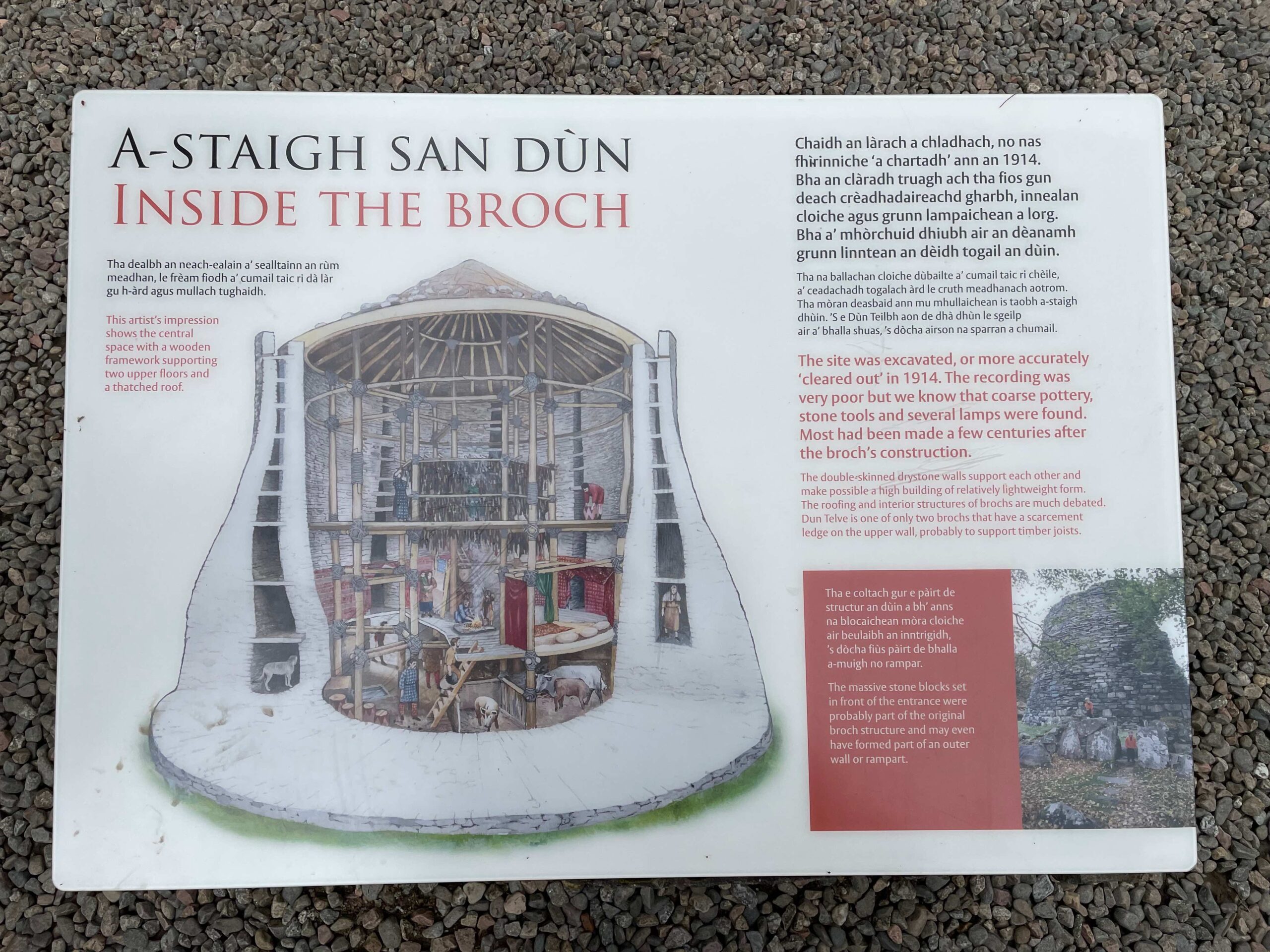
The brochs consisted of two concentric stone walls with the outer being thicker and having and sloping up at the base. These walls were connected by stone slabs as they rose. Stone was used because trees were scarce in this part of Scotland due to the Iron Age neoglaciation, a mini Ice age that killed off the native forests around 2000 BC. Between the walls were galleries and an inner spiral staircase taking you to the upper levels. It’s believed, and will hopefully be demonstrated by the Caithness Broch Project, that this two wall structure regulated the temperature inside the broch; keeping it cool in the summer and warm in the winter. An outer wall surrounding the tower was also frequently added.
There was only ever one entrance into a broch, and this was low and narrow so that people had to stoop to get through it, making it a little easier to defend. Also, a stone door frame was part of the entrance design. This allowed you to fit a door up against it and lock it into place with a beam that slotted into holes on either side (see my video below).
Life Inside the Brochs
Inside the brochs, life in the Iron Age was a blend of practicality and innovation. These structures served as multifunctional spaces, accommodating families, livestock, and valuables, all while providing protection from external threats. The upper floors functioned as living quarters, while lower levels housed animals and storage facilities.
Visiting a Broch
Discovering a broch that’s truly worth visiting—a broch of substantial height, not a mere three-foot-tall stone ring—can be a challenge if you’re not heading to the far north of Scotland or the Orkney and Shetland Islands. If you are planning such a journey, count yourself fortunate. The broch village at Gurness on Orkney and the Broch of Mousa on the Shetlands are two must-see locations.
However, if your travels take you to the West of Scotland down the A87 to the Isle of Skye or Eilean Donan Castle (famous from Highlander and James Bond), there’s no reason to miss the adjacent Brochs of Dun Telve and Glenelg. A short 30-minute drive from the A87 along a scenic, albeit narrow, country road brings you to these brochs. Parking is free, a welcome rarity, as many other Scottish tourist attractions have official parking attendants or locals eager to charge admission. The brochs, however, remain accessible 24/7 without charge. You can even deploy your drone here if you possess one.
One additional perk of visiting these two brochs is that, most likely, you’ll be the only ones there. We visited Dun Telve at the height of the tourist season in July and only saw one other group arriving as we departed. No tour buses here. If we had planned ahead, I would have picnicked here.
Resources for Further Exploration
For those yearning to delve deeper into the captivating world of Scotland’s Iron Age brochs, several excellent resources exist.
On YouTube, you can explore:
- Towers of the North: The Brochs of Iron Age Scotland (3000 BC – 200 AD) by History Time offers a comprehensive historical overview of the periods before and during the brochs.
- What are these Mysterious Prehistoric Towers in Scotland, a History Hit video available for free on YouTube, provides a concise version. The full 40-minute episode is available on their site for subscribers—a worthy investment for fellow history enthusiasts.
- Scotch Broch from Time Team (my favorite archaeological shows) actually digs up a hidden Broch on the west coast of Scotland.
From the world of books, consider:
- Towers in the North: The Brochs of Scotland by Ian Armit. An Amazon side note: the title is incorrectly listed as “Towns in the North.”
- Britain BC: Life in Britain and Ireland before the Romans by Francis Pryor. Although I haven’t read it yet, if it garners Tom Holland‘s (the historian, not the actor) approval, I’d vouch for it blindly.
The Iron Age brochs of Scotland remain a testament to the indomitable spirit of human ingenuity and their story continues to unfold. I sincerely hope you get to see one in person.